What Does a Superyacht Actually Cost to Own?
What Does a Superyacht Actually Cost to Own?
The figure most often cited in the yachting press is 10%. Buy a €20 million yacht, spend €2 million a year running it. That number is a starting point, not a budget. For a new, well-maintained yacht used 8–10 weeks per year in familiar waters, 10–12% is achievable. For an older vessel, a heavily used charter programme, or a yacht operating in remote cruising grounds, the figure trends toward 15–20%. The gap between those two numbers is where most ownership surprises happen.
Over five decades of managing yachts for private owners, we have seen the full range. What follows is a candid account of the cost structure — each category as it actually works, not as it looks in a brochure.
Crew: The Largest Fixed Cost
Crew wages typically represent 30–40% of total annual operating expenditure. They are also the most predictable line item, which makes them the right place to start.
A 40-metre yacht carries 7–9 crew. A 60-metre carries 12–16. At the senior end, current market rates (2024–2025) run as follows:
- Captain: €8,000–€16,000 per month, depending on vessel size and experience. On large yachts over 60 metres, €18,000–€22,000 is not uncommon.
- Chief Engineer: €8,000–€18,000 per month. Complex propulsion systems, stabilisers, and integrated bridge technology push this toward the upper range.
- Head Chef: €5,000–€12,000 per month. Head chef wages have risen faster than other departments in recent years — demand for experienced yacht chefs is structural.
- Chief Stewardess / Hotel Manager: €4,500–€8,000 per month.
- Bosun / Deck team: €3,500–€6,000 per month per senior crew member.
Gross wages are not the ceiling. Under MLC 2006 (Maritime Labour Convention), owners are required to provide repatriation, medical coverage, and defined minimum rest periods. Add employer social contributions where applicable, crew travel, training and certificate renewal, and the total crew cost for a 40-metre yacht runs €500,000–€700,000 annually. For a 60-metre, plan for €900,000–€1,400,000.
The ISM Code (International Safety Management) requires the vessel to maintain documented safety management systems and regular drills. These are not optional — they are flag state obligations with real cost implications for time and administration.
Insurance: Hull and Liability
Marine insurance for a superyacht is priced as a percentage of agreed hull value, typically 0.5%–1.5% annually. The range reflects factors including vessel age, cruising area, claims history, and the owner’s experience profile.
On a €15 million hull, that translates to €75,000–€225,000 per year. On a €40 million vessel, the same rate range produces €200,000–€600,000.
Policies cover Hull and Machinery (H&M) and Protection and Indemnity (P&I). P&I covers third-party liability — crew injury claims, pollution, collision damage to other vessels. This is not optional in any serious jurisdiction. If the yacht operates commercially under charter, the policy structure changes, and underwriters require confirmation of flag state compliance and classification society certification.
Cruising areas affect premiums directly. Operating in hurricane zones during the Atlantic season — typically June through November — triggers significant surcharges or exclusions. Some underwriters will not quote Atlantic coverage in summer at any price; others require passage south of 12°N by 1 June.
Berthing and Marina Costs
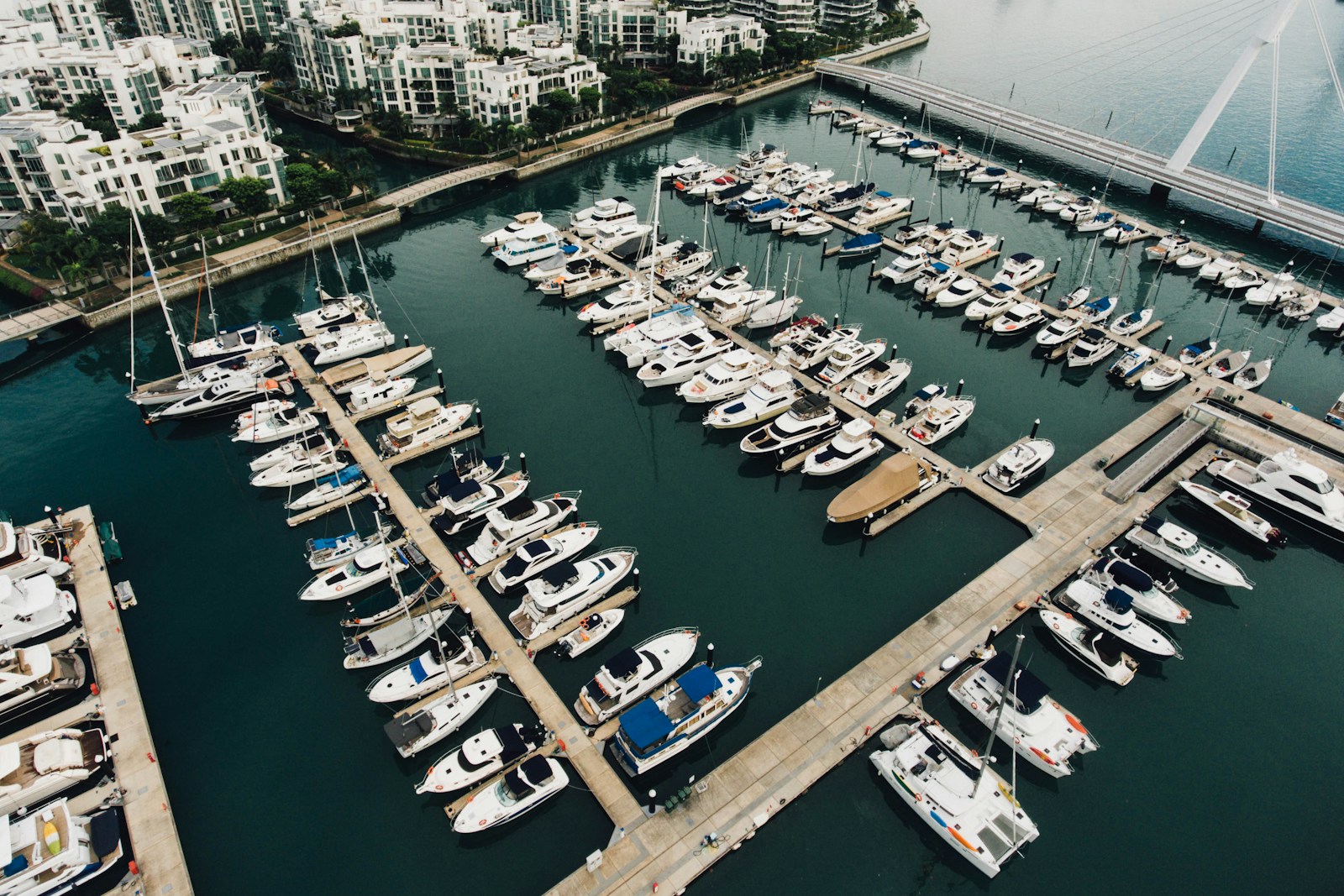
A superyacht needs somewhere to sit for most of the year. Annual berthing is one of the least glamorous and most variable costs in the budget.
In premium Mediterranean marinas, peak-season daily rates for a 40-metre berth run €500–€1,200 per day. During events — Monaco Formula 1, Cannes Film Festival, Palermo–Montecarlo — rates at the most sought-after berths reach €5,000–€10,000 per day. Annual berthing contracts, where they exist, cost €100,000–€500,000 for larger yachts at first-tier destinations including Monaco and Porto Cervo.
Winter berths in less-pressured locations — Greece, Turkey, Croatia — run significantly lower: €100–€400 per day or contracted annual rates of €30,000–€80,000 for a 40-metre. Electricity, water, waste disposal, and security add 20–30% to the base berthing fee.
For yachts in active use during summer and laid up in a more cost-effective winter berth, a realistic annual combined berthing budget for a 40-metre yacht in Mediterranean operation is €80,000–€180,000.
Fuel
Fuel is the most use-dependent variable in the budget. A yacht that crosses oceans four times a year burns an order of magnitude more fuel than one that makes short coastal passages for six weeks in summer.
A 40-metre displacement motor yacht at cruising speed burns approximately 200–350 litres per hour. At €1.00–€1.20 per litre for marine gasoil in Mediterranean ports, that is €200–€420 per engine-hour, before generator load. A yacht covering 3,000 nautical miles in a season at 10–12 knots — roughly 300–350 running hours — will burn 60,000–120,000 litres, costing €60,000–€140,000 in fuel alone. A fast displacement or semi-planing hull at higher speeds will exceed this substantially.
Generator fuel, run 24 hours a day at anchor or in marina, is a separate consideration. A hotel load generator on a 40-metre yacht running 12–16 hours per day burns 20–40 litres per hour. Over a 200-day active season, that adds €50,000–€100,000.
Owners who charter their yacht offset fuel through charterer contributions, but this requires careful budgeting — charter agreements specify fuel-included or fuel-additional terms, and mismatched expectations produce disputes.
Maintenance, Classification, and Refit Reserve
Routine maintenance on a well-run yacht — engine servicing, antifouling, paint, mechanical systems, electronics — costs 2–5% of hull value annually. On an older vessel, this figure rises; systems deteriorate, spares become harder to source, and each season’s haul-out reveals more.
Classification societies (Lloyd’s Register, Bureau Veritas, RINA, DNV among others) require periodic surveys: an out-of-water survey every 2.5 years and a 5-year special survey that is substantially more comprehensive. A 5-year special survey on a 40-metre commercial yacht typically costs €150,000–€400,000 including drydock time, structural inspections, sea trials, and any required remediation. Flag state annual safety inspections add €5,000–€15,000 in fees and administrative overhead.
Major refits — those that address interior refresh, propulsion upgrades, or structural work — are a different category. These occur every 7–12 years and cost 5–15% of the yacht’s current market value. A €15 million, 40-metre yacht requiring a comprehensive refit may incur €750,000–€2,500,000 over 4–8 months in a specialist yard.
The standard industry practice is to set aside 0.5–1% of hull value annually as a dedicated refit reserve. Owners who do not do this find the cost arrives as a shock rather than a managed expenditure.
Management Fees and Professional Administration
Most owners engage a professional yacht management company to handle technical management, crew payroll, compliance, and flag state liaison. This is not a luxury — it is the structure that keeps the vessel seaworthy, legally compliant, and insured.
Management fees typically run €3,000–€8,000 per month for a 30–50 metre yacht, or €36,000–€96,000 annually, depending on the scope of services included. Full technical management — with the manager acting as Designated Person Ashore under ISM — sits toward the upper end. Charter management carries additional fees, typically structured as a percentage of gross charter revenue (15–20%).
Flag state registration fees vary by registry. The Cayman Islands, Marshall Islands, and Malta are common flags for private yachts, with annual registration fees of €5,000–€20,000 depending on vessel size. Flag choice affects manning requirements, port state reception, and the regulatory framework governing crew employment conditions under MLC.
What the Total Looks Like
For a reference point: a €15 million, 40-metre motor yacht in full-time private use, Mediterranean operation, with a professional crew of 8 and an active charter programme to offset some costs:
| Cost category | Annual range |
|---|---|
| Crew (wages, MLC, travel) | €550,000–€700,000 |
| Insurance (H&M + P&I) | €90,000–€180,000 |
| Berthing | €80,000–€160,000 |
| Fuel | €80,000–€160,000 |
| Routine maintenance | €150,000–€300,000 |
| Refit reserve (1% hull) | €150,000 |
| Management fees | €50,000–€90,000 |
| Flag state, classification, admin | €25,000–€50,000 |
| Provisions, communications, misc | €40,000–€80,000 |
| Total | €1,215,000–€1,870,000 |
That is 8–12% of purchase price — consistent with the 10% rule for a yacht in good condition and active use. Push the age of the vessel up, expand the cruising grounds, or move from private use to commercial operation, and the upper bound rises accordingly.
The Decision Behind the Numbers
Understanding costs at this level of specificity is not about discouraging ownership. It is about structuring it correctly. Owners who enter with a clear picture of the total financial commitment — and who build a management structure that keeps costs controlled and compliance watertight — get the experience the yacht was bought for. Those who underestimate the annual budget discover it in the worst places: a deferred survey, an underinsured incident, a crew dispute.
The 10% rule is a starting signal. The real work is in the detail behind it.